 The Bitcoin Annotated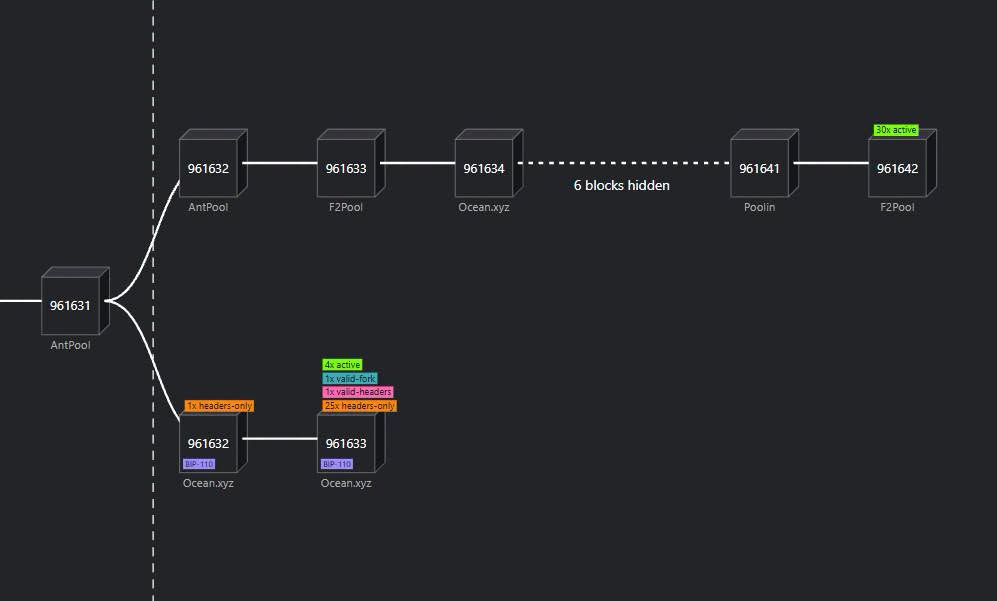
Every few years bitcoin is asked to change itself, and the argument that follows reveals who actually decides. The catalog records the last great instance as the Block Size Wars, a conflict settled less by a vote than by a threat that never had to fire. BIP-110 is the mirror image: a change that did fire, and died in public within a day.
BIP-110, titled the Reduced Data Temporary Softfork and authored under the name Dathon Ohm, proposed to cap the size of arbitrary data in bitcoin transactions for roughly a year. Its target was the flood of inscriptions and oversized data payloads that one part of the community had come to regard as spam, and that another part regarded as simply paying to use the network. The mechanism was a one-year set of consensus restrictions; the activation method asked 55 percent of miners to signal support.
They did not. Over the difficulty period before activation, fifty-one of two thousand and sixteen blocks signaled for the proposal, about two and a half percent. When the software activated anyway and its nodes began rejecting blocks that failed to signal, the network split at block 961,632. The breakaway chain mined that block and one more, 961,633, both produced by a single small mining outfit. Then it stopped. Having inherited the main chain’s mining difficulty with a rounding error’s worth of hashpower, its next block was estimated to be anywhere from most of a year to decades away. The main chain carried the rest and did not look back.
It is worth separating the numbers, because they measure different things and were routinely blurred together. About two and a half percent of blocks signaled support in advance; roughly a sixth of a percent of hashpower actually followed the fork; which is to say more than ninety-nine and a half percent stayed. Michael Saylor, among the proposal’s opponents, offered the epitaph: “Consensus is earned, not declared.” Adam Back objected to the activation method; a Bitcoin Core developer warned users to pause transfers around the split to avoid replay risk. The mining pool that had backed the fork later admitted some of its miners had landed on the minority chain by accident, and offered to make them whole.
What makes BIP-110 an artifact rather than a footnote is the cleanliness of the result. The Block Size Wars took years and left lasting animosities, and its veterans are, by and large, still arguing. BIP-110 compressed the same question, who gets to change bitcoin, into a single weekend and a single number. A fork is always free to leave. The network is under no obligation to follow it. Two blocks is what that obligation looked like when it was declined.
The proposal is not technically dead; its signaling window stays open, and versions of the idea will return. But the precedent is the one bitcoin keeps setting. The chain did not have to defeat BIP-110. It only had to keep mining the other one.